
With interest rates shifting and economic sentiment changing, it’s natural to expect the market to slow significantly. But the data from the first few months of the year tells a more nuanced story.
A market moving at different speeds
Nationally, property values have continued to edge higher, with dwelling values rising 0.8% in February and 9.9% over the past 12 months, pushing the national median value to approximately $922,800.
However, the most interesting trend we’re seeing in early 2026 is the divergence between markets.
Cities such as Perth (+2.3% in February), Brisbane (+1.6%) and Adelaide (+1.3%) continue to record strong monthly growth, while Sydney and Melbourne have been relatively flat in the short term.
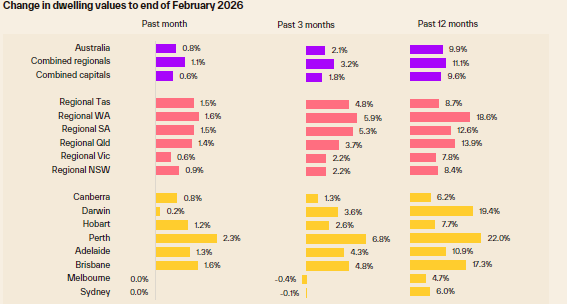
This is what many analysts are now describing as a multi-speed housing market, where some locations continue to see strong upward pressure while others stabilise.
For experienced investors, this isn’t unusual. Property cycles rarely move in unison across the country. Instead, they shift from market to market, often creating opportunity for those paying attention to the underlying fundamentals.
The interest rate question
Interest rate changes have certainly influenced buyer sentiment and borrowing capacity, particularly in higher-priced segments of the market. However, the broader housing market has remained surprisingly resilient.
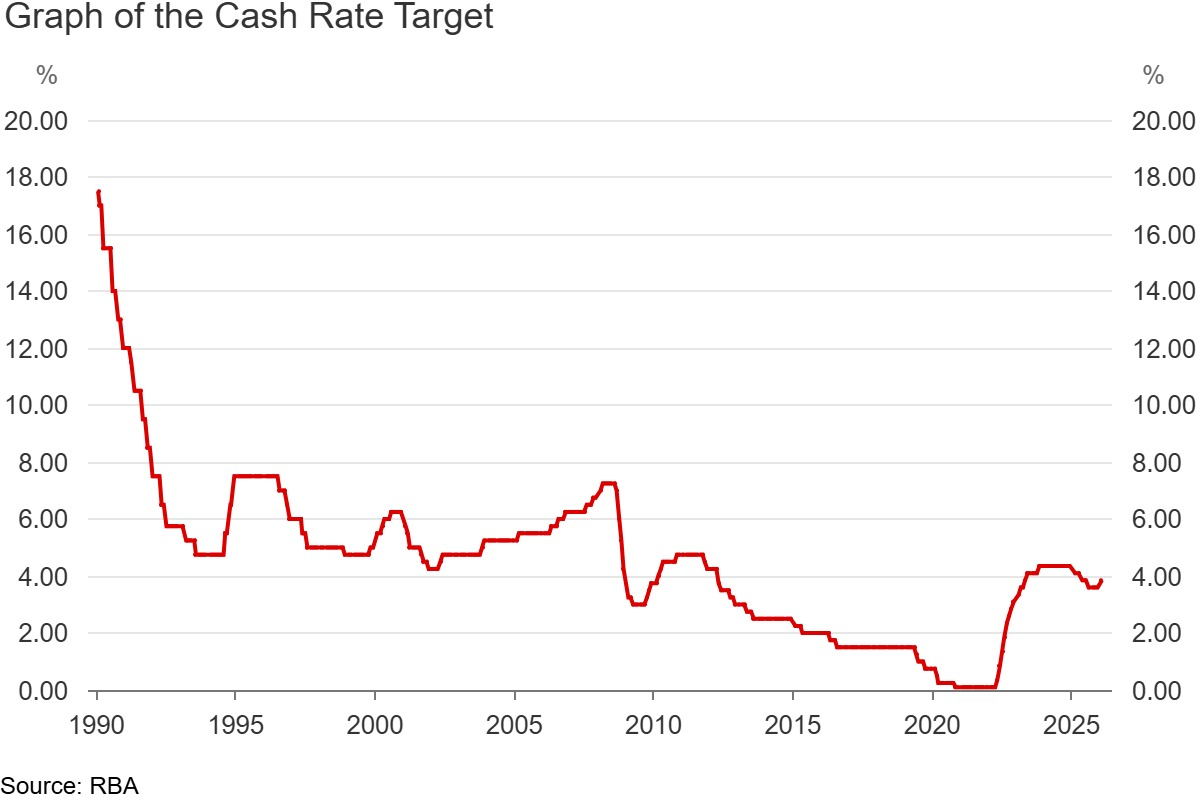
One of the key reasons is supply.In several major markets, the number of available properties remains well below historical averages. For example, listings in Perth were recently 48% below the five-year average, while Brisbane remained 31% below average.
When supply remains tight while population growth and housing demand continue, the result is often ongoing price support.
Rental markets continue to tighten
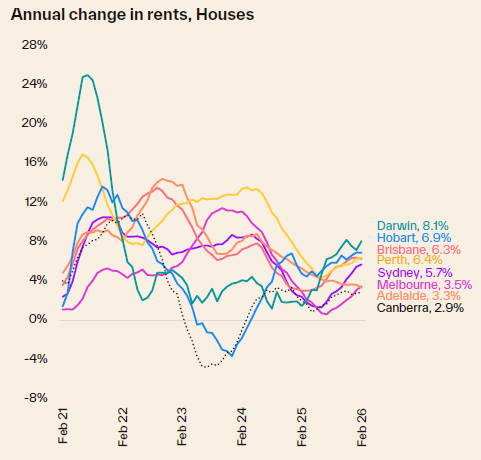
At the same time, rental markets across the country remain under pressure.
National rents have increased 5.5% over the past 12 months, with rental values continuing to trend upward into early 2026.
For many investors, this means improving rental income while the broader supply shortage continues to support long-term capital growth.
The difference we’re seeing right now. From conversations with clients over the past few months, one pattern has become very clear.The biggest divide in today’s market isn’t necessarily between cities or property types.It’s between people who are already in the market — and those still waiting on the sidelines.
Investors who entered the market over the past few years are continuing to benefit from rising rents, increasing equity, and the compounding effect of time in the market. Meanwhile, many prospective investors who have been waiting for the “perfect moment” are finding that the market quietly continues moving forward.
And over time, even modest growth can make a meaningful difference. A property valued at $700,000 today doesn’t need extraordinary growth to become $740,000 or $760,000 in the coming years — but that shift can significantly change the deposit, borrowing capacity and entry point required for new buyers.
Looking ahead
What early 2026 is showing us is that the market is becoming more strategic and more segmented.
Success isn’t simply about entering the market — it’s about understanding where the strongest supply-demand imbalances exist, which locations have long-term economic drivers, and how an investment aligns with an investor’s broader financial goals.For those approaching property with a long-term mindset, these types of environments often present some of the most compelling opportunities.
Final thoughts
One of the most common things I hear from clients who started investing years ago is this:
“I wish I had started earlier.”
Property has always been a long-term asset class. The real advantage tends to go to those who enter the market with a clear strategy and allow time to do its work.
If building long-term wealth through property is part of your plan, reach out to us and we can schedule a discovery call to discuss the strategy and markets currently driving growth in 2026.
