People continuing to arrive
Melbourne’s long-run story is one of people moving here, especially from overseas. That sustained population growth underpins the need for housing across established suburbs and growth corridors alike.

Home · Property investment advisor Melbourne
Property investment advisor · Melbourne
Equimax Property Investment Advisors is a national advisory. If you live in Melbourne or want to invest there, we start with your goals, timeline and cash flow — then research whether a Melbourne property, or a property in another of the major states, is the better long-term fit. We help clients Australia-wide.
A national advisory · Helping clients Australia-wide · Meetings by video wherever you are, or in person by arrangement.
The city
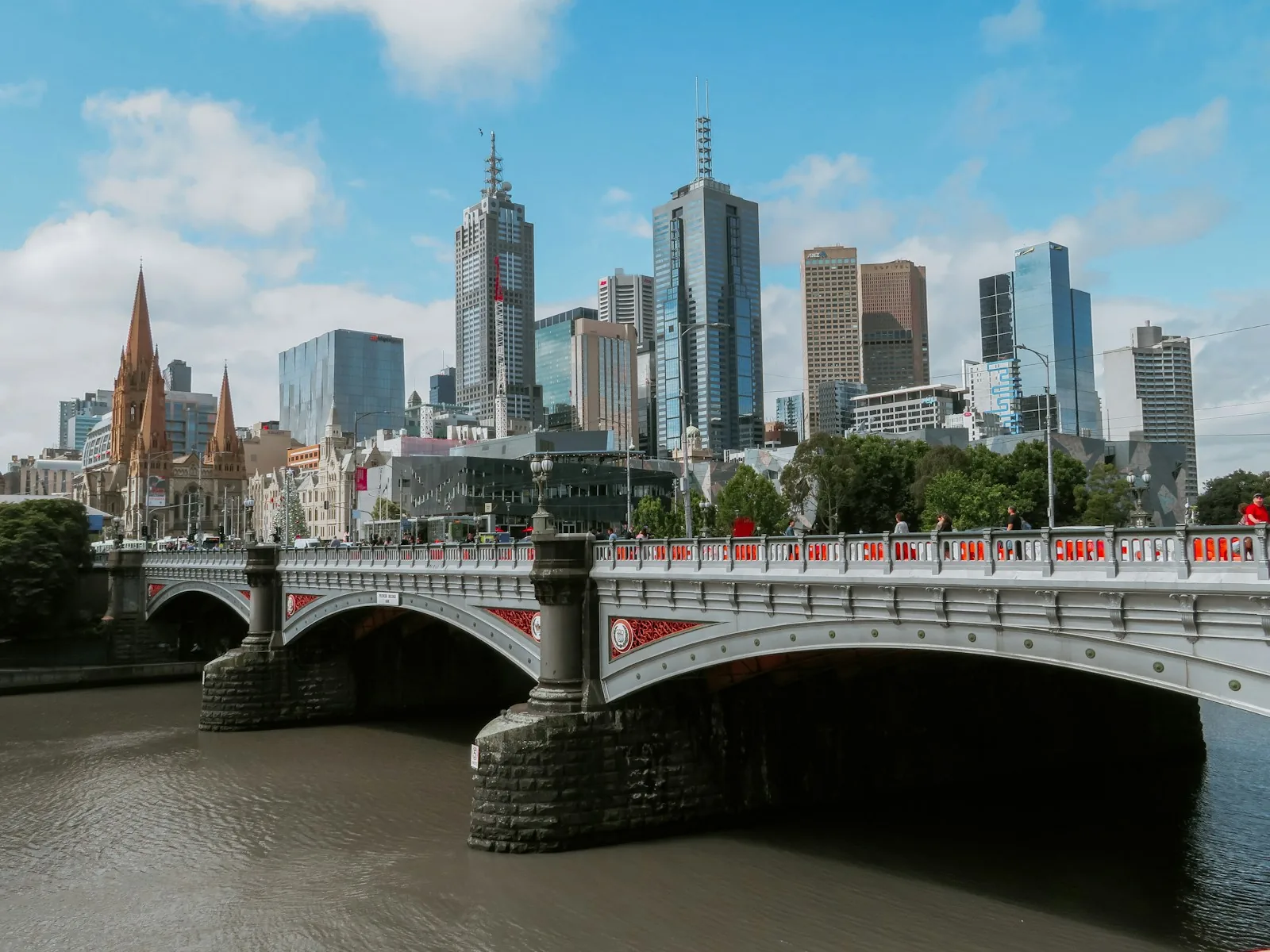
Melbourne is Victoria’s capital and one of Australia’s two largest cities. Over the fifty years to 2021 it recorded the largest population increase of any Australian capital — about 2.4 million more residents, a rise of around 91 per cent — and the gap with Sydney narrowed. Overseas migration has been a major driver of that long-term expansion.
The economy behind that growth is broad rather than tied to a single industry. Education and health precincts, professional and financial services, events, advanced manufacturing and the Port of Melbourne all play a part. People come to study, to work and to live, which is why rental demand and owner-occupier demand sit side by side in different parts of the city.
As a property market, Melbourne is large and varied. Inner, middle-ring and outer areas have not always moved together, and like every Australian capital it has moved through cycles of stronger and quieter periods. A useful plan treats those cycles as normal. It asks whether a property in Melbourne — or in another of the major states — fits your timeline, your cash flow and how much change in rent, rates or value you can absorb.
Why the city grows
Melbourne’s long-run story is one of people moving here, especially from overseas. That sustained population growth underpins the need for housing across established suburbs and growth corridors alike.
The central city remains a major employment hub, and suburban centres, universities and hospital precincts spread work and study across the metropolitan area. Better connections between those places are a large part of why current transport projects matter.
Because Melbourne is so large, demand is not concentrated in one ring of suburbs. Established middle-ring areas, fringe growth corridors and some nearby regional centres each play a different role, which is why we research from the state level down to the street.
Key infrastructure
Several long-horizon transport projects are changing how Melbourne grows. Some are already open; others will shape the city through the rest of this decade and into the 2030s.
A new orbital railway, with SRL East under construction from Cheltenham to Box Hill, planned to link middle-suburban jobs, campuses and the existing rail network in the 2030s.
Now open: twin tunnels taking the Cranbourne, Pakenham and Sunbury lines under the city, with new stations that connect people more directly to jobs, hospitals and universities.
Now open: an alternative to the West Gate Bridge, with more direct access to the Port of Melbourne and the city’s west.
Designed to complete the missing section of Melbourne’s orbital freeway between the Eastern Freeway and the M80, and due to open later this decade.

Where we look
We do not start from a fixed list of suburbs. We look at the type of area and whether it fits your plan: established middle-ring suburbs, including those that will sit closer to new orbital rail; the western, northern and south-eastern growth corridors, where much of Melbourne’s new housing has been built; and, when the research supports it, a regional centre with its own employment and rental demand. In every case we weigh how much new housing is already planned nearby against local rental demand and your numbers.
Building
House and land can be a strong fit around Melbourne when the plan supports it. We assess corridor supply — how many new homes are already planned nearby — and how that sits alongside population growth, planned transport and rental demand. We then test whether the numbers work if a build takes longer than first expected or the rent is lower than first modelled. We do not start from a fixed project list. We start from your strategy and the research. If building fits, we appoint a builder from our researched panel, review the contract with your solicitor, arrange inspections, and support you through to handover and your first tenant. We act for you, not for the builder.
Our experience
Over two decades of property investment experience has taught us that Melbourne is not a single market. A property close to a university or hospital precinct can play a very different role from one in a growth corridor. The clients we help include people who live in Melbourne and want a local investment, and people who live here and are better served by a purchase in another of the major states.
Proof, not promises
Published client story
A Melbourne couple whose first investment was a house in Lakelands, Western Australia, after research pointed there rather than to a local purchase. They used equity in their own home to fund the deposit. That is one household’s plan, not a template.
Read the client story →Published client story
A Melbourne professional couple whose first investment property is in Kawungan, Hervey Bay, chosen with a plan built around what the property would take to hold each year. That is one household’s plan, not a template.
Read the case study →Published client story
A Melbourne couple who chose to rent where they live and invest in a new house and land in Paralowie, Adelaide, with stamp duty paid only on the land. That is one household’s plan, not a template.
Read the case study →Published client story
An investor who bought a house and land off the plan in Ocean Grove, on the Bellarine Peninsula, and held it for capital growth. That is one investor’s plan, not a template.
Read the case study →How we work
We help people who live in Melbourne and people who want to invest there. We start with your strategy, then research whether a local property — or one in another of the major states — is the better long-term fit. Meetings by video wherever you are, or in person by arrangement.
Steps 1 to 4 take an average of 4 weeks. Step 5 continues every year. See each step in detail · Who we help
Our founder, Gaurav Bhatia, is a Qualified Property Investment Adviser (QPIA®) and a PIPA member, with over two decades of property investment experience. He is backed by a research and acquisition team. As an Accredited Advisor, Equimax acts for the investor. We do not act for any vendor or builder that the client contracts with.
Step one is a strategy session. Tell us where you are, and we will show you what a plan could look like.
Questions people ask
Melbourne can be, when the property fits your plan. It is one of Australia’s two largest cities, with a long record of population growth and a diversified economy. It is also a large, varied market, so a suburb that suits one household may not suit another. We look at whether a Melbourne purchase — or a purchase elsewhere — matches your timeline, cash flow and how much change in rent, rates or value your plan can absorb.
Several long-horizon transport projects are reshaping the city. The Metro Tunnel and West Gate Tunnel are now open. The Suburban Rail Loop’s first stage, from Cheltenham to Box Hill, is under construction, and North East Link is due to open later this decade. We treat that infrastructure as context for how people will move and where housing may be planned — not as a reason to buy a particular suburb.
That depends on your strategy. We look at middle-ring suburbs, growth corridors in the west, north and south-east, and sometimes a nearby regional centre. We do not publish a fixed list of suburbs, because the better fit changes with your numbers, the amount of new supply nearby and rental demand in that pocket.
Yes. Equimax is a national advisory. We help clients who live in Melbourne and clients who want to invest in Melbourne, and we buy where the research points, across all major states.
Only after the strategy says building is a fit. We then research corridor supply, rental demand and the numbers. If you proceed, we appoint a builder from our researched panel, review the contract with your solicitor, and manage the process through to your first tenant.
Meetings by video wherever you are, or in person by arrangement. Equimax is a national advisory helping clients Australia-wide. We do not run a separate office network in each city.
Start with a conversation
If you live in Melbourne, or Melbourne is the market you want to understand, start with a strategy session. We reply within one business day. The meeting takes about 60 minutes, and you decide if and when to go ahead.
Meetings by video wherever you are, or in person by arrangement. · Helping clients Australia-wide
The information on this page is general in nature and does not take into account your personal objectives, financial situation or needs. Consider your own circumstances and seek independent financial, tax and legal advice before making an investment decision. Past performance is not a reliable indicator of future performance. Equimax Property Investment Advisors is a property investment advisor, working alongside your solicitor, mortgage broker and accountant.
As an Accredited Advisor, Equimax acts for the investor. We do not act for any vendor or builder that the client contracts with.